Section One: Oceans
"Is it inevitable that our natural landscapes will be swallowed by humanity?"
|
1. THE FUTURE OF FISHING:
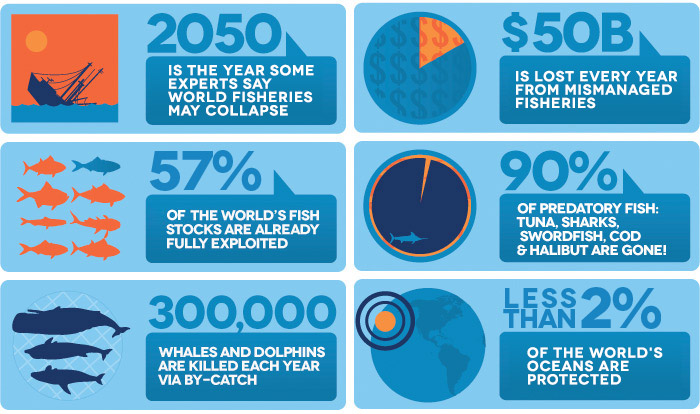
OVERFISHING AND CONSERVATION 1a. Fishing Overview PPT - IB-Style Question "Ocean Fishing Can Never Be Sustainable." Discuss (10pts) 1b. Fishing 'at home': The Nassau Grouper "The Nassau Grouper... was the first reef fish, and one of the only fully marine commercial species, to be listed as a species of concern under the U.S.A. Endangered Species Act... Historically it ranked top among reef fishes landed on islands of the region although the fish have been much reduced throughout its range. The Bahamas appear to be the only country where significant landings are still taken but, even here, declines have been noted over the last decade as conservation, protection and enforcement measures are slowly being taken in these Carribean Nations." ~ Science and Conservation of Fish Aggregates Website |
|
1c. Fishing 'Abroad' : Pirate Fishing
" Forget about what you've seen in the movies. It’s not Johnny Depp with a fishing rod. Pirate fishing fleets are usually owned by companies that operate far away from where their boats fish. The ships do their best to stay out of sight, re-fuelling, re-supplying and transferring fish to other boats at sea, far away from any port inspectors. This way, illegal fish may be mixed with legitimate catches and "laundered" through ports and on to our plates... Often these unscrupulous fleets will be instructed to target areas where communities have little political or financial power to fight back. From the oceans around Pacific Islands, to the coastal waters of West Africa, the pirate fishermen sail in, fish it out and sell it on. Normally they sell in European and Asian ports where they can almost guarantee the vessels won't be closely inspected. Their hauls can net fish worth millions of dollars – much needed income that rightfully belongs to coastal communities." ~ Greenpeace International
1e. People and Power: Aljazeera on Pirate Fishing in Sierra Leone (below)
|
|
|
1d. Now How Do We Stop Overfishing?
a) Evaluate the European "Common Fisheries Policy"
b) Complete the Worksheet on Strategies to Stop Overfishing
c) News Article: Pirate Fishing in Palau - Tiny Nation's Massive Response to Illegal Fishing
This tiny nation made a huge impact when they very publicly burned Japanese fishing boats sited off of their coast. As 'pirate fishing' becomes a larger and larger problem, what can countries realistically do to protect their waters? How is this plan effective? Where does it fail?
d) Greenpeace's 'Red List' - Seafood to Avoid at the Grocery Store: "Greenpeace Canada's Redlist has 23 seafood species, or species groups, from fisheries or fish farms which harm our oceans. The harm is to the species, other marine life, habitats or even entire ecosystems. Greenpeace urges Canada's retailers to stop selling all Redlist species unless they ensure the necessary changes are made to the fisheries and farms to guarantee sustainability and equitability."
2. OUR OCEAN FLOOR (BATHYMETRY) AND OCEAN FLOOR RESOURCES
2a. Ocean Floor PPT
2b. Ocean Floor Student Handout (complete in class or for homework)
Our ocean floor is teeming with life and as of yet more foreign to us than the dark side of the moon!! More recent technology has allowed us to know more about it's depths and some sciences (such as bathymetry - the study of the underwater topography) are growing in leaps and bounds. Unfortunately, the study of the underwater depths has also led to the exploitation of ocean resources as well, as we continue our study of ocean resources this lesson will focus on ABIOTIC resources.
2c. How Do We Use Marine Resources? See the complete list!! It is amazing just how important they are!
2a. Ocean Floor PPT
2b. Ocean Floor Student Handout (complete in class or for homework)
Our ocean floor is teeming with life and as of yet more foreign to us than the dark side of the moon!! More recent technology has allowed us to know more about it's depths and some sciences (such as bathymetry - the study of the underwater topography) are growing in leaps and bounds. Unfortunately, the study of the underwater depths has also led to the exploitation of ocean resources as well, as we continue our study of ocean resources this lesson will focus on ABIOTIC resources.
2c. How Do We Use Marine Resources? See the complete list!! It is amazing just how important they are!
|
|
|
3. SOVEREIGNTY RIGHTS AND GEOPOLITICAL CONFLICT
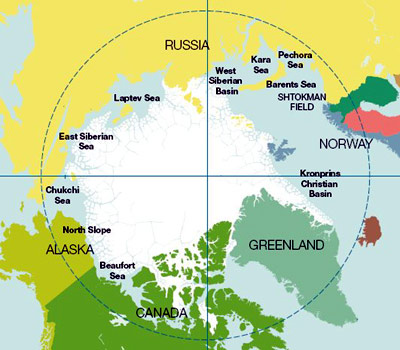
3a. Sovereignty and the Scramble for the Arctic PPT
3b. Read the articles below and answer the following questions to deepen your understanding of this issue.
“The Fight For the Coldest Place on Earth Heats Up” RT News
Why exactly is the Arctic valuable territory?
Why does this article claim the fight for the Arctic Waters are heating up?
(Use statistics from article)
“ Race to Claim High Arctic’s Oil Resources May Be a Fool’s Mission” CBCNews
Why does this article claim that the Arctic's resources may be a fool's mission?
What external body will decide on the fate of the Arctic?
What is at the centre of Canada and Russia's Claims? Do some research on the web to enhance your answer.
" Russia's Arctic Adventures" - Al Jazeera
What did Russia submit a few weeks ago to the United Nations? Why?
Why does this author believe Russia has such a desire to control more Arctic territory? (hint: there is more than one)
3a. Sovereignty and the Scramble for the Arctic PPT
3b. Read the articles below and answer the following questions to deepen your understanding of this issue.
“The Fight For the Coldest Place on Earth Heats Up” RT News
Why exactly is the Arctic valuable territory?
Why does this article claim the fight for the Arctic Waters are heating up?
(Use statistics from article)
“ Race to Claim High Arctic’s Oil Resources May Be a Fool’s Mission” CBCNews
Why does this article claim that the Arctic's resources may be a fool's mission?
What external body will decide on the fate of the Arctic?
What is at the centre of Canada and Russia's Claims? Do some research on the web to enhance your answer.
" Russia's Arctic Adventures" - Al Jazeera
What did Russia submit a few weeks ago to the United Nations? Why?
Why does this author believe Russia has such a desire to control more Arctic territory? (hint: there is more than one)
|
4. WASTE AND OTHER THREATS TO THE WORLD'S OCEANS Over 80% of marine pollution comes from land-based activities.The most toxic waste material dumped into the ocean includes dredged material, industrial waste, sewage sludge, and radioactive waste. Dredging alone contributes to 80% of all waste in the ocean, while over 60 million litres of oil run off America's roads alone and enter the oceans each year. Plastic is overwhelming sea life, with over 50 million oceanic fauna lives lost to this plague year. 4a. Oceanic Pollution PPT Your Task: Choose an ocean pollutant (oil, chemical, radioactive or plastic) and write an article for Vice Magazine (hip, trendy, look it up if you don’t know) on the major issues involved with your source of pollution. Include: Current levels of pollution, Future (expected) levels of pollution, Major Contributors and What can be done?? Minimum 2 pages. List Your Sources 4b. Waste Rubric for Vice Article and Annotated Map |
|


|
|
|
|
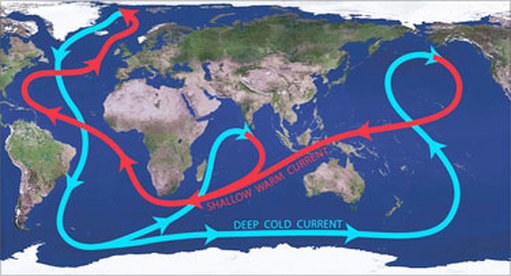
The Great Ocean Conveyor Belt
|
5. OCEAN CURRENTS AND THE GREAT OCEAN CONVEYOR BELT 5a. BBCs "Oceans" - The Power of the Planet In this landmark BBC series, Dr. Iain Stewart tells the story of how our planet works and how, over the course of 4.6 billion years and the power of many forces - including oceans - it came to be the remarkable planet it is today 5b. Student Response Sheet 5c. Intro to Oceans PPT - Ocean Currents and the Great Belt 5d. Overview of the G.O.C.B Worksheet Fill in the blanks to describe this very important current... Great Ocean Conveyor Belt SO MUCH for our planet - transfers heat (energy) nutrients, and oxygen around the globe - regulates the climate (ie: Labrador Current, Gulf Stream) - keeps us from a mass extinction event (think hydrogen sulphide!) - creates "upwelling zones" of nutrients for fish (and fisherman!) |
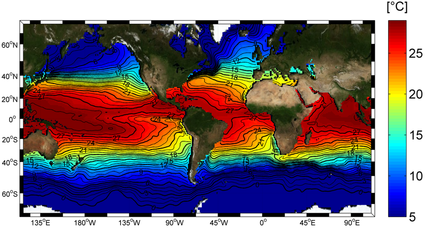
Horizontal Oceanic Temperature Variations
|
6. OCEAN TEMPERATURE AND SALINITY:
(HORIZONTAL AND VERTICIAL VARIATIONS) 6a. Temperature and Salinity Variations PPT - How do temperature and salinity relate to the functioning of ocean currents and the Great Conveyor Belt? - How does pollution affect different temp and salinity variations? - How does global warming affect temp and salinity variations? 6b. Temp & Salinity Student Worksheet Video on Ocean Currents, Salinity & Temperature, Click HERE |
|
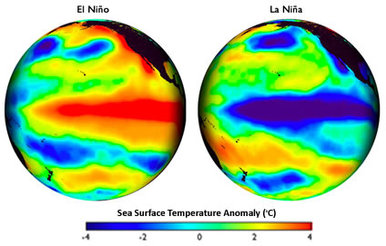
7. THE EL NINO SOUTHERN OSCILLATION (ENSO)
7a. Atmospheric and Oceanic Change: ENSO PPT 7b. Need-to-know-definitions!! The Coriolis Effect El Nino The Ekman Cycle La Nina The Walker Cycle ENSO 7c. El Nino Effects PPT 7d. El Nino Effects Table Student Worksheet 7e. El Nino Geo Factsheet (Very good overview for revision) Article: 2015 El Nino Set to be Among Worst Recorded 7f. El Nino Videos (see below)
|
|
|
8. OCEANS AS CARBON SINKS: ANOTHER OCEANIC VALUE! 8a. Briefly describe the Carbon Cycle - Using the Carbon Interactive Place special emphasis on the carbon stored by the oceans... 8b. Read the following articles and answer questions below Oceans Absorb Half of All Manmade CO2 - National Geographic How much carbon has been absorbed by the ocean? How are 'the oceans as a carbon sink' good for our planet? How are 'the oceans as a carbon sink' having a negative impact? Oceans Are Soaking Up Less CO2 - BBC News How important are the oceans in regulating CO2 levels? How could the change in CO2 uptake affect the planet? Less Carbon Dioxide As Marine Systems Change - WorldWatch Where in the ocean is most carbon stored? How has increased carbon in the ocean changed the chemistry? What does this mean for the function of oceans as carbon sinks? Which coastal features are most effective at sequestering carbon? |
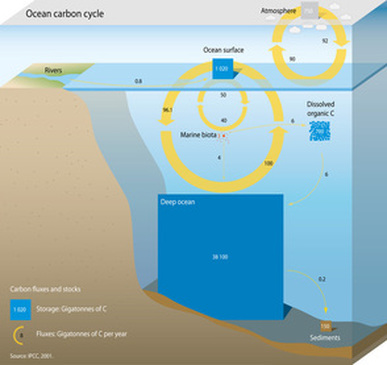
For more information on the importance of the oceans in storing carbon, please see this website...
|
Coastal Margins
|
|
9. INTRODUCTION TO COASTAL MARGINS AND MARINE PROCESSES
(How does the movement of water in the form of waves, tides and long shore drift affect coastlines?) 9a. Intro to Changing Coastlines and Marine Processes PPT 9b. Student Worksheet - The Movement of Water on Coasts IB Geography Course Companion, Pgs 153-155 |
10. COASTAL EROSION: WAVE ACTION AND LITHOLOGY ON CLIFF PROFILES
10a. Coastal Erosion: Wave Action on Coasts
Using this website, your textbook pg 155, and the website below draw four annotated diagrams:**
Hydraulic Action, Abrasion, Attrition and Corrosion/Solution
Remember, an annotated diagram shows the process and ALSO provides annotations (descriptions) to highlight the most important parts
**(you can draw two erosion processes on one diagram as in textbook)
10b. Coastlines: Wave Action and Methods of Erosion
Using this website, draw two annotated diagrams:*
Concordant and Discordant coastlines
(be sure to label AND describe the different coastal features that form as a result of these coastlines)
10a. Coastal Erosion: Wave Action on Coasts
Using this website, your textbook pg 155, and the website below draw four annotated diagrams:**
Hydraulic Action, Abrasion, Attrition and Corrosion/Solution
Remember, an annotated diagram shows the process and ALSO provides annotations (descriptions) to highlight the most important parts
**(you can draw two erosion processes on one diagram as in textbook)
10b. Coastlines: Wave Action and Methods of Erosion
Using this website, draw two annotated diagrams:*
Concordant and Discordant coastlines
(be sure to label AND describe the different coastal features that form as a result of these coastlines)
|
|
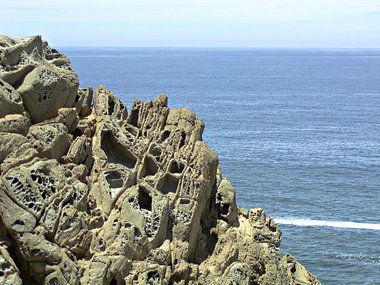
11.COASTAL FEATURES & SUB-AERIAL PROCESSES
(How do waves & land processes affect coastlines?) 11a. Coastal Erosion PPT (Sub-Aerial/Waves) 11b. Student Worksheet - Coastal Features 11c. Coastal Impacts: Sub-Aerial Process Definitions 11d. More Information on Weathering |
|
|
EMERGENT AND SUBMERGENT COASTLINES
(How are coastlines affected by changes in sea level?) 12a. Retreating/Advancing Coastlines PPT 12b. The Earth Under Water Record the potential and possible effects of a rise in sea levels... |
|


BEACH PROFILES AND LONGSHORE DRIFT
13a. Longshore Drift Overview - Read and Answer questions below IN YOUR OWN WORDS
What conditions are needed for deposition to occur?
How does longshore drift sort sediments?
What is a beach?
What are the features of a beach profile?
How do the seasons influence the beach?
13b. Copy and Paste the pictures below to your notes and label: Storm Beach, Berms, Cusps, Ripples
In your notes, provide a description below each.
13a. Longshore Drift Overview - Read and Answer questions below IN YOUR OWN WORDS
What conditions are needed for deposition to occur?
How does longshore drift sort sediments?
What is a beach?
What are the features of a beach profile?
How do the seasons influence the beach?
13b. Copy and Paste the pictures below to your notes and label: Storm Beach, Berms, Cusps, Ripples
In your notes, provide a description below each.


|
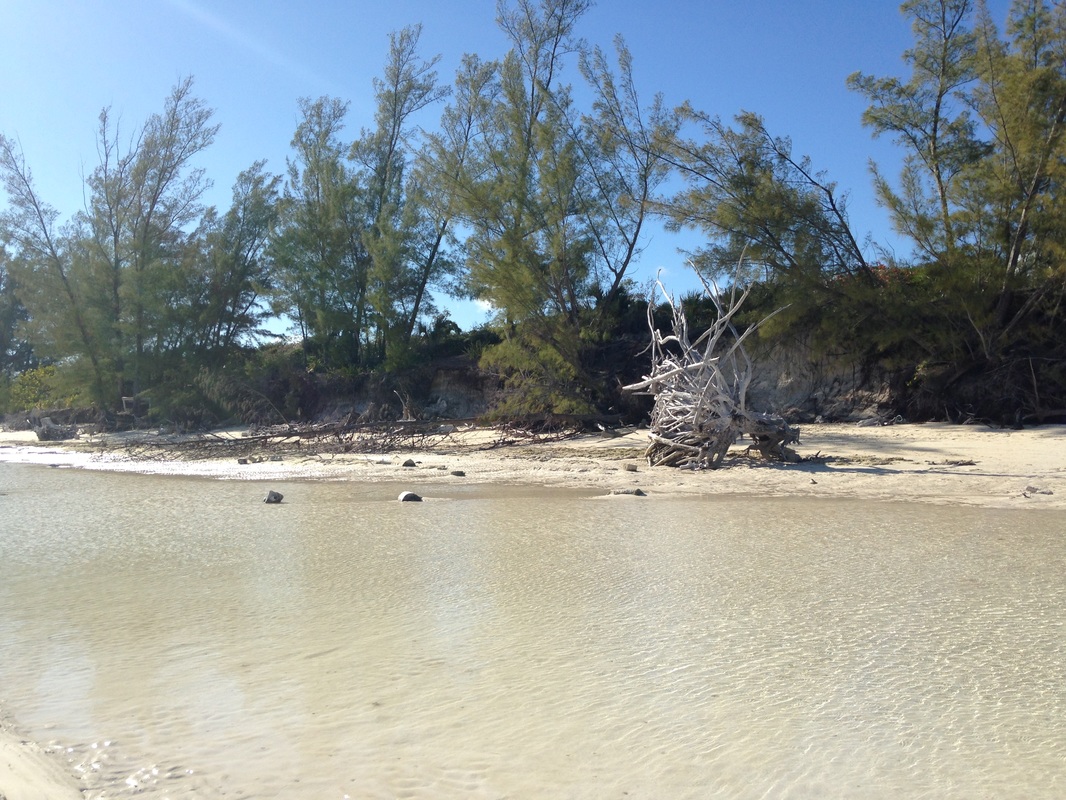
COASTAL DEFENCES ON GRAND BAHAMA
14a. Introduction to Coastal Defences And introduction to the physical management of the coast through hard or soft engineering, which attempts to control natural processes such as erosion and longshore drift. 14b. Intro to Coastal Defences Worksheet |
|
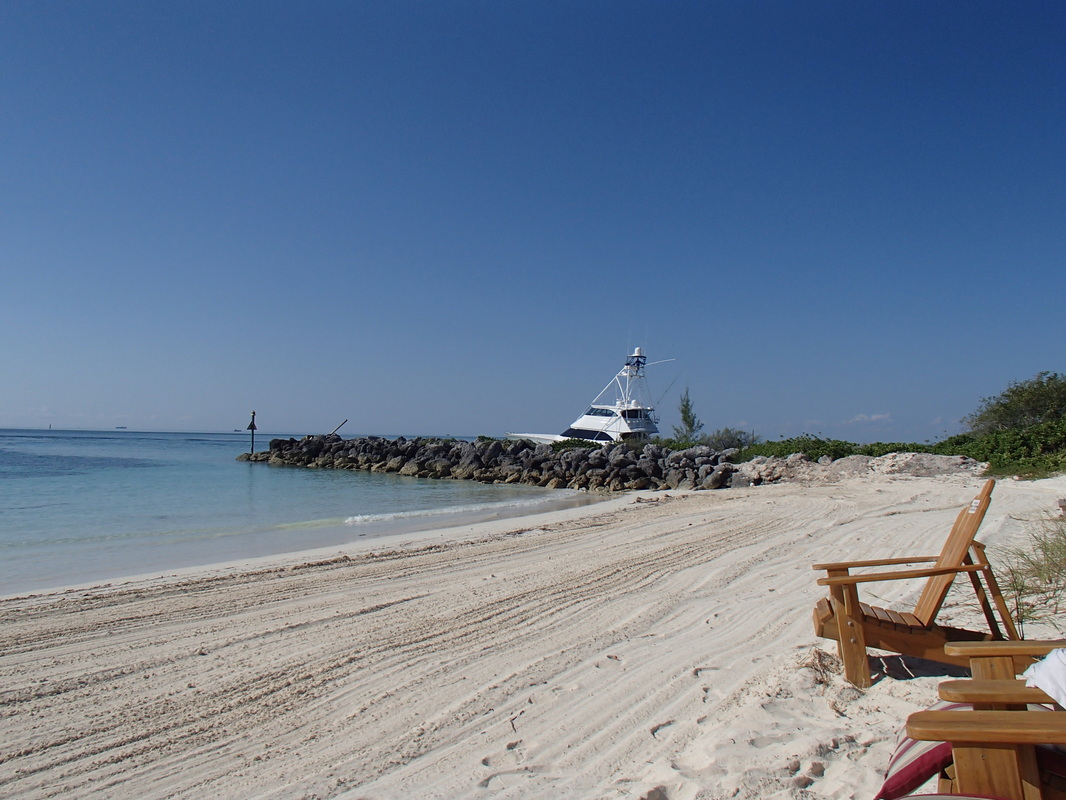
 Beach erosion on Grand Bahama - Coral Beach!
COASTAL MANAGEMENT PROCESSES
15a. Coastal Management Virtual Field Trip: Bahamas
15b. Coastal Management Scorecards and Student Worksheet
Throughout the lecture, rate the various actions we can take to prevent beach erosion and flooding. Tally your results and find the best option for management on the Bahamas isalnds. Present your findings in a paragraph arguing why your choice is the best choice for this island.
15c. Complete the homework for Monday - IB Textbook p. 161 "To Do" section
15a. Coastal Management Virtual Field Trip: Bahamas
15b. Coastal Management Scorecards and Student Worksheet
Throughout the lecture, rate the various actions we can take to prevent beach erosion and flooding. Tally your results and find the best option for management on the Bahamas isalnds. Present your findings in a paragraph arguing why your choice is the best choice for this island.
15c. Complete the homework for Monday - IB Textbook p. 161 "To Do" section
|
|
COASTAL CONFLICTS - WHY ARE WE IN CONFLICT OVER COASTS?
16a) Bimini Development Case Study PPT 16b) Article: Anyone for Golf? Not us, Say Biminites 1. Describe the most recent referendum on Bimini. 2. Explain the three conditions sent by the council in the letter to Mr. Christie. 3. What is the Bimini Blue Coalition and how do critics seek to portray this group? 4. Describe what conservationists seeking instead on North Bimini. 16c) Article: Why No North Bimini Marine Reserve? 1. Describe the MPA initiative recently undertaken by the Bahamian government. 2. Justify the the author's concern with the new MPAs. 3. What are the rules of the suggested NBMR? How would this help Bimini? |
|
CORAL REEFS AND MANGROVES: LIFE SUPPORT
17a. "Life on the Reef" - The Greatest of Them All "Examine the development and the environmental and economic value of coral reefs and mangrove swamps." - IB Detailed Curriculum Use the film question sheet to take notes on the sentence above. 17b. Using your textbook, complete the following questions: The Importance of Coral Reefs and Mangroves |
|
Additional Reading: Coasts and Geopolitical Conflict
Turning a Reef Into an Island in the South China Sea
China Builds New Radar in the Spratly Islands: Another Piece of the Puzzle
Turning a Reef Into an Island in the South China Sea
China Builds New Radar in the Spratly Islands: Another Piece of the Puzzle
